Introduction
We live in an era where wearing your health on your ring finger is no longer sci-fi — it’s reality. Smart rings used to be niche, but in 2026 they’re proving themselves as serious fitness tech tools. With this shift in mind, the long-standing champ Oura Ring is now being challenged by the newcomer Omni Ring — and the real question is: Can Omni dethrone Oura?
🎥 Watch the full Oura Ring comparison video here:
In this article, I’ll walk you through everything I discovered in testing both rings — from comfort and features to value and real-world accuracy. Whether you’re a gym-goer, a data nerd, or simply someone aiming to improve recovery and sleep, you’ll walk away with a clear verdict: which ring is better for you in 2026.
If you want an even deeper breakdown of the Omni Ring itself, you can also read my full Omni Health Ring Review where I share my personal experience using it in the gym, during cardio, and while tracking recovery. I also filmed a full comparison video you can watch here:
2️⃣ Design & Comfort — The Challenger Looks Better Than Ever
When it comes to smart ring design, Oura has long been the gold standard — but in 2026, Omni is challenging that title in more ways than one.
The Oura Ring has always been known for its sleek, minimalist look. It feels premium, polished, and stylish enough to blend in at the office or a dinner event. But this year, the Omni Ring is proving that performance gear can look just as refined — and do it for less.
Despite being newer to the market, the Omni Ring is actually thinner and lighter than the Oura. The Omni measures about 6.5 mm wide and 2.4 mm thick, while the Oura sits closer to 7.9 mm wide and 2.9 mm thick. In everyday use, that small difference makes a big impact — the Omni feels sleeker and more comfortable, especially during long workouts or sleep tracking.
While the Oura’s titanium finish still gives it that luxury feel, the Omni’s slimmer profile and durable coating make it the better fit for fitness enthusiasts who don’t want to baby their tech. It looks modern, feels smooth on the finger, and holds up to gym sessions, runs, and daily wear without issue.
Simply put:
- Oura is still the best-looking “lifestyle” ring.
- Omni is the rising competitor that’s thinner, lighter, and built for people who actually train.
3️⃣ Features & Tracking Accuracy — Can Omni Really Compete?
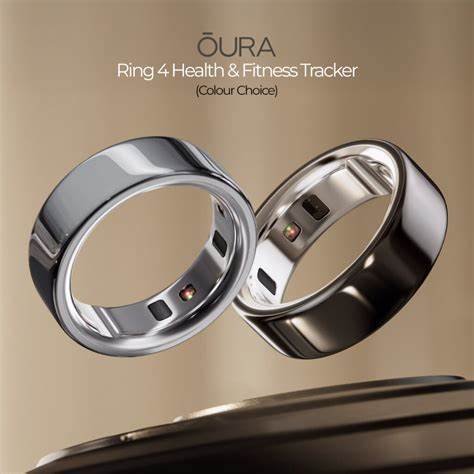
When it comes to health tracking, the Oura Ring has built its reputation around accuracy and reliability. For years, it’s been the go-to ring for tracking sleep, heart rate, recovery, and body temperature, setting the standard for wellness wearables.
But in 2026, the Omni Ring is challenging that dominance — and surprisingly, it’s holding its own.
Both rings track the essentials:
- Sleep stages (light, deep, REM)
- Heart rate and HRV (heart rate variability)
- Body temperature and recovery readiness
- Daily activity levels and step counts
However, Oura still has a few advantages that set it apart — especially for women and users focused on full-body wellness.
The Oura Ring includes menstrual cycle tracking and can even provide early illness detection warnings based on changes in your body temperature and resting heart rate. It’s designed for overall lifestyle health, giving users insights into sleep quality, stress, and recovery from a holistic point of view.
The Omni Ring, meanwhile, is built with fitness enthusiasts in mind. Its data feels more performance-driven, with clearer metrics for people who work out regularly. Whether you’re lifting weights, boxing, or doing cardio, Omni’s real-time tracking and accurate heart rate readings make it feel like a true training tool.
Accuracy-wise, both perform impressively — with heart rate, HRV, and temperature readings that line up closely with smartwatch data. During testing, Omni’s sensors proved consistent during both rest and workouts, which is a big deal for a newer brand.
While Oura still leads in app polish and data visualization, Omni is closing the gap fast, offering weekly recovery summaries and training insights that directly appeal to athletes and fitness-driven users.
| Feature | Oura Ring | Omni Ring |
|---|---|---|
| Sleep Tracking | ✅ Advanced, highly detailed | ✅ Accurate and improving |
| Heart Rate / HRV | ✅ Reliable | ✅ Very consistent |
| Temperature Tracking | ✅ Yes | ✅ Yes |
| Menstrual Cycle Tracking | ✅ Yes | ❌ Not yet |
| Early Illness Detection | ✅ Yes | ❌ Not yet |
| Step Tracking | ✅ Yes | ✅ Yes |
| Workout Mode | ⚠️ Limited | ✅ Optimized for fitness |
| App Insights | ⭐ Polished, lifestyle-focused | ⭐ Data-driven, performance-based |
| Subscription Fee | 💲Monthly required | ❌ None |
| Price | $299–$349 + $5.99/mo | $299 one-time |
In short — Oura remains the best choice for those who want an all-around lifestyle tracker with health monitoring and wellness features.
But if your focus is training, recovery, and gym performance, Omni is quickly becoming the smarter pick — thinner, lighter, and offering most of the same features without a monthly subscription.
🔗 Helpful Resources:
• Learn how to build endurance and burn more fat with my full guide to Zone 2 Cardio Training.
• Want more gear recommendations? Check out my Top 10 Best Wearable Fitness Devices of 2025 .
4️⃣ Battery Life & Charging — Small Rings, Big Difference
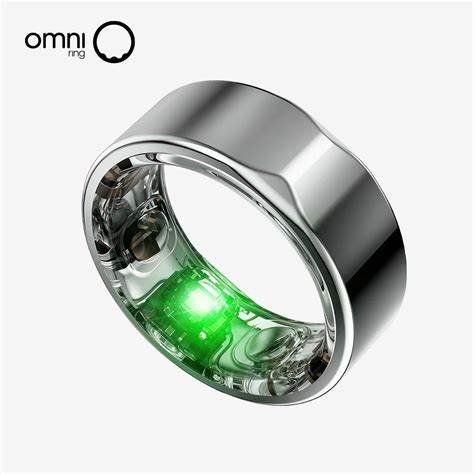
Battery life might not sound exciting, but for a wearable you’re meant to wear 24/7, it makes a huge difference.
The Oura Ring typically lasts between 4 to 7 days depending on how often you sync it and which features you use (especially continuous heart rate tracking). The battery life is decent — but when you factor in the monthly subscription and optional accessories, it starts to feel a little pricey for what you get.
The Omni Ring, on the other hand, comes surprisingly close with an average of 5 to 6 days per charge — and it doesn’t require a subscription to access your data. For a newer competitor, that’s impressive. The battery performance feels consistent, even when tracking workouts or sleep continuously.
Another key difference is charging convenience.
Oura’s latest model offers a sleek charging case, which makes it easy to top up while traveling — but it doesn’t come cheap. The case costs about $90 if purchased separately. The Omni Ring keeps things simple with a magnetic charging dock included in the box, and it powers up fully in about 60–70 minutes.
In real-world use, you’ll find yourself charging both rings roughly once a week, but Omni’s faster charge time and no added accessories required make it more practical for most users.
| Feature | Oura Ring | Omni Ring |
|---|---|---|
| Battery Life | ⏱️ 4–7 days | ⏱️ 5–6 days |
| Charging Method | Charging case or dock | Magnetic dock |
| Full Charge Time | ~80–90 minutes | ~60–70 minutes |
| Travel Convenience | ✅ Premium case option ($90) | ✅ Lightweight, included |
| Subscription Needed | ✅ Yes | ❌ No |
If you’re the type who hates juggling multiple chargers, both rings are solid — but the Omni Ring’s faster charging and included dock make it simpler and cheaper to live with.
The Oura Ring’s travel case is sleek, but paying an extra $90 on top of a monthly subscription starts to add up fast.
In short: both perform well, but Omni once again delivers great battery life and convenience at a better value.
5️⃣ App Experience — Lifestyle Polish vs Fitness Focus
A smart ring is only as good as the app behind it — and in this category, Oura still leads in visual polish, but Omni is quickly redefining what fitness tracking can feel like.
The Oura App is one of the most refined and elegant interfaces in the wearable space. From your sleep score to your readiness index, everything feels smooth, organized, and approachable. It’s great for users who want to better understand their recovery, stress, and sleep cycles without being overwhelmed by data.
Oura’s app also integrates advanced wellness features such as menstrual cycle tracking and early illness detection — using subtle body temperature changes and resting heart rate to alert you before symptoms appear. It’s more than a tracker; it’s a personalized wellness companion.
The Omni App, by contrast, takes a more fitness-driven approach. It might not look as sleek, but it delivers powerful, actionable data that’s ideal for people who train seriously. You’ll find clear summaries of heart rate trends, training intensity, and recovery status, helping you make smarter decisions about when to push harder or rest.
But what really makes Omni unique is its built-in AI system, which acts like having a fitness coach on your finger. It learns from your patterns — your workouts, sleep, and recovery — and adjusts its recommendations over time. If your HRV drops or your recovery lags, the app might prompt you to take a lighter day or increase your hydration. These small adjustments can make a big difference in long-term performance.
And best of all, everything in Omni’s app is unlocked from day one. No subscriptions, no hidden tiers, no extra fees. You pay once for the ring, and you own your data — period.
Oura might still be the go-to choice for lifestyle and health insights, but Omni’s AI-driven coaching makes it the smarter pick for athletes and everyday gym-goers who want real feedback without the monthly bill.
| Feature | Oura App | Omni App |
|---|---|---|
| Interface | ⭐ Sleek, intuitive | ⭐ Functional, performance-focused |
| Recovery Insights | ✅ Excellent | ✅ Personalized via AI |
| Menstrual Tracking | ✅ Yes | ❌ Not yet |
| Illness Detection | ✅ Yes | ❌ Not yet |
| Workout Metrics | ⚠️ Basic | ✅ Detailed and adaptive |
| AI Coaching | ❌ None | ✅ Yes — real-time insights |
| Data Paywall | 💲 Premium features locked | ✅ Everything included |
| Monthly Fee | $5.99/month | $0/month |
If you value design, polish, and total wellness tracking, Oura still feels luxurious.
But if you want a performance-minded, AI-powered coach that learns from your training, the Omni Ring delivers far more functional value — especially for people who live in the gym.
6️⃣ Price & Value — One-Time Payment vs Monthly Commitment
This is where the gap between the two rings becomes crystal clear. Both are premium devices, but when you actually do the math, Omni delivers far more for far less.
The Oura Ring starts at $299 to $349, depending on the finish, and it requires a $5.99 monthly subscription to access key insights such as readiness, sleep, and recovery. That’s roughly $72 per year, or over $350 in five years — just in subscription fees. Add the $90 charging case, and your total cost easily crosses $600–700 over time.
The Omni Ring, meanwhile, is normally $235, but it’s currently on sale for $199 until the end of 2025 — and with the 15 % off code OMNI15, you can get it for around $169 total. That’s an incredible deal for a device that gives you full data access with no subscription, no paywalls, and no hidden costs.
Even better, the Omni Ring is HSA/FSA eligible, meaning you could save even more if your health-spending account covers wellness tech. That brings its effective cost even lower — and makes it one of the most affordable smart-health investments available right now.
For one flat price, you get:
✅ The ring itself
✅ The magnetic charger (included)
✅ Full app access from day one
✅ Lifetime data ownership
💰 Get 15 % off your Omni Ring when you use code OMNI15 at checkout.
| Cost Factor | Oura Ring | Omni Ring |
|---|---|---|
| Starting Price | $299 – $349 | $239 list / $199 sale / ~$169 with code OMNI15 |
| Subscription Fee | $5.99 per month ($72 per year) | ❌ None |
| 5-Year Total Cost | $600 – $700 + | $169 (one-time) |
| Charging Case | $90 optional | Included magnetic dock |
| App Access | Limited without subscription | Fully unlocked |
| HSA/FSA Eligible | ⚠️ Not listed | ✅ Yes |
| Discount | ❌ None | ✅ 15 % off code OMNI15 |
If you’re after luxury aesthetics and lifestyle insights, Oura Ring still holds appeal.
But if you want real-world performance, affordability, and full control of your data, the Omni Ring easily wins this round. At roughly $169 with the discount — and potentially less with HSA/FSA savings — it’s the best-value smart ring of 2026.
❓ FAQ — Oura Ring vs Omni Ring (2026)
1. Is the Omni Ring better than the Oura Ring?
It depends on your lifestyle.
If you want wellness, lifestyle tracking, menstrual insights, and sick-day detection, the Oura Ring is still king.
If you want fitness-first performance, AI coaching, no subscription fees, and the best value, the Omni Ring is the better choice — especially for gym-goers and athletes.
2. Which ring is more accurate in 2026?
Both rings are extremely accurate for sleep, HRV, heart rate, and temperature tracking.
In real-world training sessions, the Omni Ring tends to perform better during workouts, while the Oura Ring is stronger at wellness and recovery analytics.
3. Does the Omni Ring require a subscription?
No. Omni gives you full access to all metrics from day one.
There are no monthly fees, no locked features, and no premium tiers.
This is one of the biggest differences between the two rings.
4. What can the Oura Ring track that Omni can’t?
Oura currently offers:
Menstrual cycle tracking
Early illness detection alerts
A more polished and lifestyle-focused app
These features make Oura more appealing for overall wellness, especially for women.
5. Which ring has better battery life?
Both last around 5–6 days on a single charge.
Omni charges slightly faster, while Oura offers an optional $90 charging case for travel convenience.
6. Can I use HSA or FSA funds to buy a smart ring?
The Omni Health Ring is HSA/FSA eligible, meaning you may be able to use pre-tax dollars to reduce the cost further.
As of now, Oura does not list HSA/FSA eligibility.
7. Which smart ring is better for fitness?
For serious training, the Omni Health Ring is the better option.
It’s thinner, lighter, more durable, and its AI-powered coaching makes it feel like having a mini fitness coach on your finger — perfect for lifters, runners, athletes, and anyone tracking progress daily.
8. Which ring is the better value in 2026?
Omni Ring by a landslide.
With the current sale ($199) + your 15% discount code (OMNI15), it drops to around $169 — with lifetime data access.
Oura costs $299–$349 + $72/year in subscription fees + optional $90 travel case.
7️⃣ Final Verdict — Oura Ring vs Omni Ring (2026)
After testing both rings side by side, it’s clear we’re looking at two completely different philosophies of what a smart ring should be.
The Oura Ring is still the king of wellness design.
It’s beautiful, polished, and packed with lifestyle insights — especially for women who want menstrual tracking or anyone who appreciates early illness detection. If you want a ring that blends into everyday life, looks premium, and gives you a holistic look at your recovery, Oura is still incredibly strong.
But the Omni Ring is the challenger that came to fight.
It’s thinner, lighter, more durable during workouts, subscription-free, and dramatically cheaper — especially with the current sale and your NO-subscription lifetime access. The AI insights make it feel like having a mini fitness coach on your finger, and for lifters, runners, and seriously active people, Omni just feels like the more performance-minded choice.
Which ring should you get?
- Choose Oura Ring if you want:
⭐ Lifestyle insights
⭐ Wellness tracking
⭐ Menstrual cycle + illness detection
⭐ A polished, premium experience - Choose Omni Ring if you want:
💪 A fitness-first training tool
💪 AI-powered coaching
💪 No monthly subscription
💪 The best value in 2026
💪 HSA/FSA savings
💪 A price as low as ~$169 with your code
For most active people — especially gym-goers, walkers, and zone 2 cardio fans — Omni is the better long-term investment.
8️⃣ Conclusion — The Future of Smart Rings in 2026
Smart rings are no longer “nice to have.”
They’ve become one of the best ways to understand your sleep, recovery, stress levels, and daily movement without wearing a bulky smartwatch 24/7.
The Oura vs Omni debate represents the bigger shift happening in the fitness world right now:
➡️ People want better data.
➡️ People want better value.
➡️ People want tools that help them take action.
And whether you choose Oura or Omni, the most important thing is this:
You’re taking a step toward better awareness, better habits, and better long-term health.
And if you want to dive deeper, make sure you also watch the full YouTube comparison I made here — I show the rings side-by-side, test them in real training sessions, and break down everything visually:
🎥 Watch the full video:
https://youtu.be/AiWwWTnrRhY?si=ejP3zS77-Dpj0cAy
This wasn’t the easiest article to write because both of these rings are genuinely great products. But if this breakdown helps you even a little — whether you’re choosing your first smart ring or upgrading from an older model — then I’m truly grateful. ACG Fitness exists to make fitness easier, more accessible, and more realistic for everyone.
Action Creates Greatness.