
If you’ve ever stepped on the scale and immediately felt your mood shift, you’re not alone. One day the number is down, the next it’s up, and suddenly you’re questioning whether what you’re doing is even working. For a lot of people, tracking their weight turns into a daily emotional roller coaster instead of a useful tool.
I’ve been there myself — but from the opposite side. When I was trying to gain weight, I’d step on the scale every morning and see it go up one day, down the next. Even though I was eating more and training consistently, I constantly questioned whether I was actually making progress or just spinning my wheels. That uncertainty can mess with your confidence fast, no matter what your goal is.
The truth is, most people don’t fail at weight loss or weight gain — they fail at tracking weight the right way. The scale gets blamed, motivation takes a hit, and perfectly good habits get abandoned because a single number didn’t move the way they expected it to.
As we head into 2026, more people than ever are focusing on their health, especially around the new year. But if you don’t understand how to track your weight properly, the scale can do more harm than good. Weight fluctuates daily for reasons that have nothing to do with fat loss or muscle gain, and treating every weigh-in like a final verdict is one of the fastest ways to burn out.
In this guide, you’ll learn how to track your weight in 2026 without driving yourself crazy. We’ll break down why the scale lies, how often you should actually weigh yourself, and what matters far more than a daily number. This isn’t about obsessing — it’s about using the scale as a tool, not letting it control you.
Why Your Weight Changes From Day to Day
One of the biggest mistakes people make when learning how to track your weight is assuming the scale should move in a straight line. In reality, your weight naturally goes up and down from day to day — even when you’re doing everything right.
These daily changes usually have nothing to do with fat gain or fat loss.
Here’s why the number on the scale can change so easily.
1. Water Weight
This is the main reason your weight fluctuates.
Your body holds onto water depending on:
- How much salt you eat
- How many carbs you eat
- How stressed you are
- How hard you trained
A salty meal, a tough workout, or a stressful day can all make the scale go up the next morning. That doesn’t mean you gained fat — it just means your body is holding more water.
2. Food Still in Your System
Food has weight. If you ate a larger meal the night before, your body may still be digesting it when you step on the scale.
This is why weighing yourself at random times of day makes tracking your weight confusing. The number can change just because your stomach isn’t empty yet.
3. Sleep and Stress
Poor sleep and high stress can both cause your body to hold extra water. When that happens, the scale may go up even if your eating hasn’t changed.
This is one reason why the scale doesn’t always reflect real progress — especially during busy or stressful weeks.
4. Exercise and Soreness
Hard workouts cause small amounts of muscle soreness. While your body recovers, it holds water to help repair your muscles. This can temporarily increase your scale weight.
So even if you’re eating well and training consistently, the scale may not move the way you expect right away.
What This Means for Tracking Your Weight
Daily scale changes are normal. They don’t mean your plan isn’t working.
If you want to learn how to track your weight correctly, you have to stop reacting to single weigh-ins. One day doesn’t tell the full story — patterns over time do.
Next, we’ll cover how often you should weigh yourself and the best way to use the scale without stressing over it.
Your weight is not the same as body fat. When learning how to track your weight, remember that the scale includes water, food, muscle, and everything else in your body — not just fat.
How Often Should You Weigh Yourself? (And How to Do It Correctly)
When learning how to track your weight, how you weigh yourself matters just as much as how often. Small inconsistencies can easily change the number on the scale and make progress feel confusing when it really isn’t.
Here’s how to make your weigh-ins as accurate and stress-free as possible.
The Best Time to Weigh Yourself
The most consistent time to weigh yourself is:
- First thing in the morning
- After using the bathroom
- Before eating or drinking anything
- Wearing little to no clothing (ideally just underwear)
This removes as many variables as possible. Food, water, clothes, and daily activity can all shift the scale, so keeping your weigh-ins consistent helps you track real trends instead of random noise.
Sleep Matters More Than You Think
A poor night of sleep can cause your body to retain more water the next day. When that happens, the scale may be higher even if your nutrition and training are on point.
This is another reason not to panic over a single weigh-in. If you slept poorly, had a stressful day, or trained hard the day before, the number may not reflect actual progress.
we break this down here in our guide on 👉 how to get quality sleep guide.
Choose a Frequency You Can Stick To
There’s no “perfect” schedule — only one you can follow consistently.
- Daily weigh-ins work if you can stay neutral and focus on trends
- 2–3 times per week is ideal for most people
- Weekly weigh-ins are best if the scale causes anxiety
The goal of tracking your weight isn’t to check your discipline — it’s to collect useful information over time.
Use the Same Scale, Every Time
Different scales can give different readings. To track your weight correctly:
- Use the same scale
- Place it on a hard, flat surface
- Avoid moving it around between weigh-ins
Consistency beats perfection.
What Not to Do
If you want to avoid confusion, don’t:
- Weigh yourself at random times of day
- Compare morning weigh-ins to evening weigh-ins
- React emotionally to one higher number
One weigh-in doesn’t tell the full story. Patterns do.
Bottom Line
If you want to learn how to track your weight properly, focus on consistent conditions, not daily perfection. Weigh yourself the same way, at the same time, and judge progress over weeks — not days.
Next, we’ll cover why weekly averages matter more than individual weigh-ins and how to use them to actually understand your progress.
Why Weekly Averages Matter More Than Daily Numbers
If you only take one thing away from learning how to track your weight, let it be this:
progress is measured in trends, not single weigh-ins.
Daily weigh-ins are noisy. Weekly averages cut through that noise.
Daily Numbers Are Unreliable
Your weight can change from day to day because of:
- Water retention
- Sleep quality
- Stress
- Training soreness
- Digestion
That means a higher number on Tuesday doesn’t automatically mean you gained fat — just like a lower number on Friday doesn’t guarantee fat loss.
This is where most people get discouraged. They react emotionally to individual weigh-ins instead of looking at the bigger picture.
What a Weekly Average Actually Is
A weekly average is simply the average of all your weigh-ins for the week.
For example:
- Monday: 180.4
- Wednesday: 179.8
- Friday: 180.1
Your weekly average would be 180.1 lbs.
That single number tells you far more about your progress than any one weigh-in ever could.
Why Weekly Averages Work
Weekly averages:
- Smooth out daily fluctuations
- Reduce stress and overthinking
- Make progress easier to see
- Keep emotions out of the process
When you track weekly averages, you stop asking, “Why is my weight up today?” and start asking, “Is my average trending in the right direction over time?”
That’s how to track your weight correctly.
How to Use Weekly Averages
You don’t need anything fancy.
- Weigh yourself consistently (daily or a few times per week)
- Write down the numbers
- Calculate the average at the end of the week
- Compare this week’s average to last week’s average
If the average is slowly moving in the right direction over several weeks, your plan is working — even if individual days look messy.
Weight Loss and Weight Gain Use the Same Rule
This applies whether you’re:
- Trying to lose fat
- Trying to gain muscle
- Trying to maintain your weight
When I was trying to gain weight, weekly averages helped me stop second-guessing myself. Instead of panicking over a lighter morning, I could see that my average was still creeping up over time — which meant I was on track.
The same logic works for fat loss.
Bottom Line
If you want to learn how to track your weight without driving yourself crazy, stop letting single weigh-ins decide how you feel. Weekly averages tell the real story.
Next, we’ll cover other ways to track progress besides the scale — because weight is only one piece of the puzzle.
How to Track Your Weight Without a Scale

Learning how to track your weight doesn’t mean you have to live and die by the scale. In fact, some of the most meaningful progress happens during periods when the number on the scale barely moves at all.
How Your Clothes Fit
One of the simplest and most underrated ways to track progress is paying attention to how your clothes feel. If your pants are looser around the waist, your shirts fit better through the shoulders, or things just feel more comfortable overall, your body is changing — even if the scale hasn’t caught up yet.
For many people, this is the first sign that fat loss is happening.
Progress Photos (Yes, Like Those IG Transformations)
You’ve probably seen those transformation videos on Instagram where someone looks completely different after a few months. Those aren’t magic tricks — they’re just a series of progress photos taken over time.
When you take photos under the same conditions every few weeks, they can reveal changes that the scale completely misses. Subtle fat loss, muscle definition, and posture changes often show up in photos long before the scale reflects anything meaningful.
Used correctly, progress photos aren’t about comparison or perfection. They’re just another tool to help you understand how your body is changing.
Strength and Performance
If you’re lifting more weight, doing more reps, or moving with better control, that matters. Strength gains are a clear sign your body is adapting in a positive way.
It’s very common to lose fat and gain muscle at the same time, which is why understanding how to track your weight means looking beyond the scale. Muscle is denser than fat, so the number may stay the same even though your body composition is improving.
In fact, building muscle will help you burn fat even faster. Check out our post here for 5 reasons why you should build muscle to burn fat
Energy, Sleep, and How You Feel
Feeling stronger, having more energy during the day, sleeping better at night, and recovering faster from workouts are all signs that your habits are working. These changes don’t show up on a scale, but they matter just as much — if not more.
Why These Methods Matter More Than the Scale
Here’s the reality most people don’t talk about: if the scale still says 200 pounds, but you’re lifting more, your clothes fit looser, and your progress photos show a clear change, then who cares what the scale says at that point?
That’s real progress.
There are many ways to track your weight but when you learn how to track your weight properly, you stop letting a single number decide how you feel. The scale becomes one data point instead of the final verdict. And for most people, that mindset shift is what makes progress sustainable long term.
Using Cronometer to Make Tracking Your Weight Easier
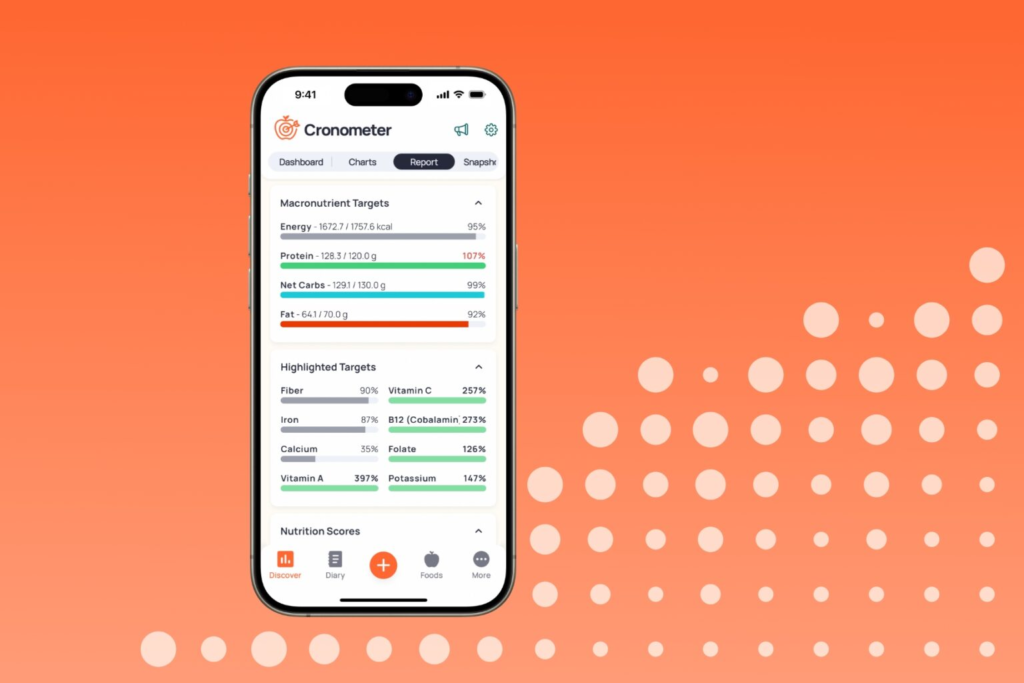
Once you understand how to track your weight using trends instead of daily emotions, having the right tools can make everything simpler. For me, that tool is Cronometer. Its an award winning weight tracker app that makes its very simple to understand how much you are eating.
I personally use Cronometer to track my calories and protein intake, and the biggest reason I like it is how simple it is to use. You don’t need to be tech-savvy or spend hours logging food. You can scan barcodes to instantly pull up the exact macros for what you’re eating, which makes tracking surprisingly fast.
One of the most useful features is the photo option. You can literally take a picture of your food, and the app gives a pretty accurate estimate of the calories and macros based on the photo. And let’s be honest — most of us are already taking pictures of our food anyway. You might as well use an app that tells you how many calories are actually on your plate.
Cronometer isn’t about being perfect. It’s about awareness. When you can clearly see how much you’re eating — especially protein — tracking your weight starts to make a lot more sense. You stop guessing, stop overcorrecting, and start focusing on consistency.
If you’re serious about learning how to track your weight properly, using an app like Cronometer can remove a lot of frustration from the process. You don’t have to track forever, but even using it for a few weeks can help you understand your habits and make better decisions moving forward
👉 Use Cronometer to track your calories and protein intake — it’s simple, accurate, and beginner-friendly.
Using a Scale the Right Way (Without Obsessing Over It)
Even though the scale isn’t everything, it’s still a useful tool to monitor your weight when you understand how to use it correctly. The problem isn’t the scale itself — it’s how much meaning people attach to a single number.
If you’re learning how to track your weight properly, the scale should be used for patterns, not daily judgment.
The most important thing is consistency. Weigh yourself under the same conditions each time — ideally first thing in the morning, after using the bathroom, and before eating or drinking anything. This removes a lot of the daily noise that causes confusion and frustration.
You also don’t need anything fancy. A basic digital scale works just fine as long as it’s reliable and you use the same one every time. Smart scales can be helpful, but they’re not required to track your weight loss progress. The habit matters far more than the technology.
If you don’t already have a scale at home, having one makes it easier to track weekly averages and spot long-term trends instead of guessing. Just remember: the scale is there to inform you, not control you.
👉 If you need one, a simple digital scale like this one from Amazon is more than enough
(Etekcity Digital Body Weight Bathroom Scale)
How to Think About the Number
Here’s the mindset shift that makes tracking your weight sustainable:
If the scale stays the same but:
- You’re lifting more
- Your clothes fit looser
- Your progress photos show change
- Your energy and sleep are improving
…then the scale is missing the bigger picture.
That doesn’t mean it’s useless — it just means it’s incomplete.
When you combine scale trends with weekly averages, calorie awareness from Cronometer, and real-world signs of progress, tracking your weight becomes calmer, clearer, and far less frustrating.
Frequently Asked Questions About Tracking Your Weight
How often should I track my weight?
There’s no single best answer, but most people do well weighing themselves 2–3 times per week or daily if they can stay neutral and focus on weekly averages. The key is consistency, not frequency. Learning how to track your weight properly means looking at trends over time instead of reacting to one number.
Why does my weight change even when I eat the same foods?
Daily weight changes are usually caused by water retention, digestion, sleep, stress, and training — not fat gain. This is completely normal and one of the main reasons people get frustrated when they don’t understand how to track their weight correctly.
Is it bad to weigh yourself every day?
Daily weigh-ins aren’t bad, but they’re not for everyone. If the scale affects your mood or motivation, weighing yourself less often is usually a better option. Tracking your weight should support your goals, not stress you out.
Can I make progress even if the scale doesn’t move?
Absolutely. If you’re getting stronger, your clothes fit better, your progress photos show changes, and your energy is improving, you’re making progress — even if the scale stays the same. That’s why understanding how to track your weight goes beyond just the number.
Do I need an app or a special scale to track my weight?
No. You can track your weight with a basic scale and a notebook. Apps like Cronometer simply make it easier to spot patterns and remove guesswork, especially when tracking calories and protein. Tools are helpful, but consistency matters most.
Affiliate Disclosure
Some links in this article are affiliate links, including links to Amazon. This means that if you click a link and make a purchase, ACG Fitness may earn a small commission at no extra cost to you. These commissions help support the site and allow us to continue creating free, helpful fitness content. We only recommend tools and products we genuinely use or believe can add value.
Conclusion: Track Smarter, Not Harder
Learning how to track your weight doesn’t have to be stressful, confusing, or obsessive. The scale is just a tool — not a verdict on your effort, your discipline, or your worth.
When you focus on consistency, weekly averages, and real signs of progress like strength, energy, and how your clothes fit, tracking your weight becomes clearer and far less frustrating. Some weeks the scale will move. Other weeks it won’t. That doesn’t mean you’re failing — it means progress isn’t always linear.
Using simple tools like a basic scale and apps like Cronometer can help remove guesswork and keep you grounded in reality instead of emotion. But remember, tools only work when they support good habits — not when they create pressure to be perfect.
As we head into 2026, the goal isn’t to chase a number. It’s to build habits you can actually stick to. Track your weight with patience, zoom out when things feel confusing, and give your body time to respond.
Progress comes from small actions done consistently — and when you take that approach, everything gets easier.
Action Creates Greatness.