Intro
Walking into a new gym for the first time is intimidating — even if no one wants to admit it.
You open the door and instantly feel eyes on you.
You’re not sure where to go, what machines to start with, or whether you even belong there.
Your heart’s beating a little too fast, and your brain is racing:
“Is this the right gym for me?
Will I stick with it?
Am I already being judged?”
And honestly… that feeling right there is why so many people quit before they even get started. They pick the wrong gym — a place that doesn’t match their goals, their personality, or their confidence level — and then blame themselves when they stop showing up.
But the truth is:
Finding the right gym makes everything easier.
You feel safer.
You feel motivated.
You feel like you belong.
You actually want to show up.
And in 2026, with more gyms than ever — powerlifting gyms, boutique studios, 24/7 clubs, women-only gyms, recovery lounges, influencer-run micro gyms — choosing the right one has never mattered more.
So in this guide, we’re going to break down exactly how to find the right gym for YOU — your goals, your personality, your lifestyle.
No sales pitch.
No gym-owner marketing fluff.
Just the real stuff that actually determines whether you stay consistent or fall off after two weeks.
And if you want help comparing real gyms in your area, I built the ACG Fitness Gym Directory to make it easier — but first, let’s figure out what you really need in a gym.
✅ Section 1: Know Your Real Fitness Goal (Most People Get This Wrong)
Before you even step foot inside a gym, you need to know why you’re going.
Not the fake reason you tell people.
Not the vague “I want to get healthier.”
Not the “New Year, new me” pressure kicking in.
I mean the real goal — the one that actually drives your decision-making.
Because here’s the truth:
The wrong gym for your goal will kill your motivation faster than any workout ever will.
Let me give you a few examples:
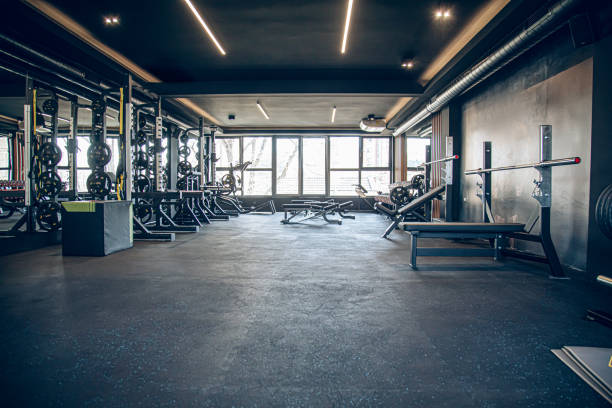
🔥 If your goal is to build muscle…
You need a gym with:
- Squat racks
- Benches
- Barbells
- Dumbbells heavier than 60 lbs
- Space to deadlift without being judged
A small boutique studio or a treadmill-only chain gym?
Yeah… that won’t cut it.
🏋️♀️ If your goal is weight loss or general fitness…
You want:
- Lots of cardio options
- Fun classes (Zumba, boot camps, cycling)
- A welcoming environment where you feel comfortable
You don’t need a hardcore powerlifting gym if you’re just trying to lose 20 lbs and feel good again.
🥊 If you want confidence, discipline, and a supportive community…
A martial arts gym, boxing gym, or CrossFit box might be a better fit than a traditional gym.
Some people don’t want machines — they want coaching and energy.
🧘 If your goal is stress relief, recovery, or better mental health…
Look for gyms with:
- Saunas
- Yoga classes
- Quiet stretching areas
- Recovery tools (massage chairs, cold tubs, infrared rooms)
Trust me — the environment matters just as much as the workout.
⭐ Most beginners never ask themselves this:
“What type of gym will I actually enjoy?”
Because the gym you enjoy is the gym you’ll stick to.
Be honest with yourself:
- Do you want a busy gym? Or something quiet?
- Do you want classes? Or to lift alone with headphones in?
- Do you want a gym full of hardcore lifters? Or a more relaxed, beginner-friendly vibe?
- Do you like bright, energetic spaces? Or darker, more private ones?
This is your journey — not anyone else’s. This is important to remember when looking for a gym for beginners.
🎯 Before moving to the next section…
Ask yourself one question:
👉 “If I could design my perfect gym from scratch, what would it have?”
Whatever came to mind — that’s what you should look for.
2. Location, Hours & Convenience: Your Gym Should Fit Your Life — Not the Other Way Around
Here’s something most fitness influencers won’t tell you when choosing a gym:
to find the right gym has less to do with equipment… and more to do with convenience.
I’ve been going to the same gym for over 10 years — not because it’s the nicest, biggest, or trendiest.
I go because it’s five minutes from my house.
That short drive is the reason I’ve stayed consistent for a decade.
If it were 20–25 minutes away? I promise you, I wouldn’t be there half as often.
Most people quit the gym not because they’re “lazy,” but because the gym simply doesn’t fit their real life.
✔️ Is the location realistic on your busiest days?
Not your best days — your real-world days:
- When you’re stressed
- When work ran late
- When it’s freezing outside
- When motivation is at zero
If your gym isn’t on your daily route (home → work → errands), it becomes a chore instead of a routine.
Convenience is the #1 predictor of whether you actually stick to your fitness journey.
✔️ Do the hours match your lifestyle?
Gyms have wildly different schedules:
- Some close early
- Some open late
- Some shut down half their amenities on weekends
If you’re an early-morning lifter, you need a place that opens before 6 AM.
If you train at night, you need late hours — not a gym that shuts down right as you’re getting ready to go.
The right gym works around you, not the other way around.
✔️ Parking & crowd levels matter more than people admit
If you’ve ever circled a parking lot for 10 minutes at 6 PM… you know the deal.
Parking stress + peak-hour crowds can kill motivation fast.
These little frictions add up — and they’re a major reason people stop going.
✔️ Quick test: Drive there during your actual workout time
Before signing up, test the commute during the time you plan to train.
If the drive feels annoying now, imagine it on a freezing Tuesday in February when you’re tired and hungry.
Your future self will thank you.
Why This Matters
to find the right gym isn’t about hype, aesthetics, or influencer recommendations.
It’s about choosing a place that’s so easy to get to, you stop negotiating with yourself.
The “perfect gym” on paper is worthless if you never show up.
The right gym is the one you actually go to — consistently.
3. What Equipment & Amenities Do You Actually Need? (Don’t Overthink This)

One of the biggest mistakes people make when searching for the right gym is thinking they need everything:
❌ 20 different machines
❌ A sauna, steam room, and hydro-massage
❌ A turf field, boxing ring, Pilates studio, and smoothie bar
❌ A $150/month “luxury fitness experience”
Let me save you months of overthinking:
👉 You only need the gear that helps you hit your goals.
Everything else is optional.
And most of the fancy stuff?
Cool to have — but not required at all.
Let’s break this down so you don’t waste money or time.
✔️ If your goal is to build muscle (most people):
You need a gym with:
- Free weights (dumbbells that go to at least 80–100 lbs) — essential for long-term progression
- Barbells + racks — squats, bench, deadlifts, overhead press… the real muscle builders
- Cable machines — for controlled isolation work
- Benches — adjustable is ideal
That’s it.
You do not need 27 different machines built by NASA.
You need resistance, consistency, and a place where you can lift without waiting forever.
✔️ If your goal is weight loss or general fitness:
Look for:
- Treadmills or stationary bikes
- Stair climber (bonus: incredible for calorie burn)
- Rowing machine
- Open space for stretching or light circuits
You don’t need an entire performance center — you need cardio options you enjoy and space to move.
✔️ If you want a community vibe or accountability:
Check whether the gym offers:
- Group classes (yoga, HIIT, spin, strength circuits)
- Small-group training
- A friendly environment where people actually talk to each other
Community matters more than people think — which is why some gyms feel “right” within minutes of stepping inside.
✔️ Nice-to-have amenities (NOT dealbreakers):
These are bonuses, not necessities:
- Sauna or steam room
- Cold plunge tubs
- Smoothie bar
- Turf field
- Basketball court
- Massage chairs
- Child-care center
If these motivate you to show up? Great.
But don’t choose a gym based only on the extras.
✔️ Ask yourself a simple question:
“Will I actually use this?”
If the answer is no, you’re paying for nothing.
Most beginners walk into a gym, see a machine, and think:
“I guess I should use that.”
No.
Use what brings you closer to your goal — not what looks cool on Instagram.
⭐ Pro Tip: Try find the right Gym With a Day Pass — and Ask About Guest Passes
Before you sign anything, ask for a free day pass (most gyms offer one).
But here’s something people forget:
👉 Ask if they offer guest passes too.
A lot of gyms will let you bring a friend for free or for a small fee — and this can be a game changer.
Working out with a friend:
- Keeps you accountable
- Makes the gym less intimidating
- Builds consistency faster
- Makes the whole experience more enjoyable
And honestly?
Half of the reason I stayed consistent for my first few years of lifting was because I had someone to show up with.
So when you test the gym:
- Do your normal workout
- See if the equipment feels right
- Check if the vibe matches your personality
- And bring a friend if possible — because your training environment + your training partner can make or break your fitness journey
If you walk out thinking,
“Yeah… I could see myself coming here three days a week,”
then you’ve found the right place.
4️⃣ Pricing, Contracts & Hidden Fees — Don’t Get Tricked in 2026

Here’s the part nobody warns you about until it’s too late:
Gyms are businesses first.
And in 2026, when operating costs are rising and everyone is trying to lock in long-term members before New Year’s, a lot of gyms get… sneaky.
Not evil.
But strategic.
And if you’re new, it’s easy to get caught in a membership you regret.
Let me break down what actually matters when evaluating price — without all the marketing fluff.
💳 Monthly Cost: What’s Normal in 2026?
These are the real ranges you’ll see (US-based):
- $10–$25/month: Budget gyms (Planet Fitness, Crunch Basic, Chuze Basic)
- $40–$70/month: Mid-tier gyms with real equipment + classes
- $80–$200+/month: Premium gyms (Equinox, Lifetime, boutique studios)
Now here’s the truth:
👉 Most people don’t need the $150 membership.
If your goal is to lose fat, build muscle, and stay consistent — any gym with quality weights, a squat rack, and a few machines is enough.
Your routine matters more than the price tag.
📜 The Contract: Read This Before You Sign Anything
Gyms love long-term commitments because you’re most motivated before you start.
But here’s what to watch out for:
1. “12-Month Minimum” Contracts
If you’re new to fitness, committing for a year before you even know if you like the gym is risky.
2. Cancellation Fees
Some gyms charge $50–$150 to cancel early.
Some require 30–60 days notice.
Always ask:
“What is the cancellation process? And what fees come with it?”
If they can’t answer directly — huge red flag.
3. Annual Fees
This one gets everyone.
Budget gyms often charge a $40–$80 annual fee around the same month every year — even if you’re on a cheap monthly plan.
4. Enrollment Fees That Magically Appear
A lot of gyms will try to hit you with a $50–$200 “enrollment” or “starter” fee.
But here’s the inside trick:
👉 Most gyms will waive it if you ask.
Just say:
“Can you remove the enrollment fee? If not, I may look at other gyms.”
They almost always fold.
🧾 Know EXACTLY What You’re Paying For
Here’s the quick script to use when talking to staff so you don’t get ripped off when trying to find the right gym:
“What is my total monthly cost?
What extra fees should I expect?
If I cancel, how much will it cost?
Can I freeze my membership if needed?”
If they dodge the questions, walk away.
A gym that’s honest about pricing is usually honest about everything else.
💡 ACG Insight: More Expensive ≠ Better
I’ve been going to the same gym for over 10 years…
not because it’s fancy…
but because:
🔥 It’s 5 minutes from my house
🔥 It has the equipment I need
🔥 The people and the energy feel right
That’s it.
The right gym is the one you can see yourself walking into consistently — not the one with the flashiest sign-up deal.
➡️ Up Next: Gym Atmosphere & Community — This Matters More Than Equipment

Before you sign any membership, you need to understand something the fitness industry rarely talks about:
Your gym’s culture can make or break your success.
Let’s get into that next.
6. Understand Gym Culture (Because Every Gym Has a Personality)
This is something most beginners overlook — but it’s one of the biggest reasons people stay at a gym or quit after three weeks:
Every gym has a culture. And the culture has to match you.
You could walk into two gyms with the exact same equipment…
and still have completely different feelings about them.
Let’s break down a few popular gym “types,” so you know what to expect.
🏋️ Gold’s Gym & Hardcore Lifter Environments
Gold’s Gym, Crunch Iron, old-school bodybuilding gyms — these places are built for people who lift heavy and train hard.
Pros:
- Tons of free weights
- Good squat racks and benches
- Motivating atmosphere if you love seeing serious lifters
- Great for building muscle
Cons:
- Can feel intimidating if you’re brand new
- Peak hours get packed
- Not as much beginner hand-holding
If your goal is pure muscle growth, these gyms are often unmatched — but only if you’re comfortable in that environment.
👨👩👧 The YMCA / Community Gyms
The YMCA is honestly one of the most underrated gyms in America.
These places focus on community, not aesthetics.
Pros:
- Families, seniors, beginners — everyone is welcome
- Pools, classes, basketball courts
- Trainers who are genuinely friendly
- Zero pressure to “look a certain way”
Cons:
- Not always the best free-weight sections
- Fewer hardcore lifting options
If you’re someone who wants a supportive, friendly environment, the YMCA is a great fit — and it’s perfect if you like swimming or group classes.
💜 Planet Fitness / Gym For Beginners
Say what you want about Planet Fitness — it fills a real need.
This is the gym for people who feel intimidated by “gym bros” or just want somewhere simple and cheap to get moving.
Pros:
- Extremely affordable
- No judgment vibe
- Clean and low-pressure
- Great for cardio and machines
Cons:
- Limited free weights (no squat racks)
- Not ideal for people trying to build serious strength
- The culture can sometimes feel too relaxed
If you’re looking for a gym for beginners and just want a place to start building confidence, Planet Fitness is a solid option.
🔥 The Truth About Gym Culture
Here’s what matters most:
You need a gym where you feel like you belong.
I’ve been going to the same gym for over 10 years — not because it’s the nicest or has the fanciest equipment — but because it fits me. The vibe is right. I know the people. It’s five minutes from my house. It feels like my second home.
That’s what you’re looking for.
A place where you don’t feel judged.
A place where you can grow.
A place where, on your worst days, you still feel comfortable walking through the door.
Once you understand the gym’s culture — not just the machines — you’ll know instantly whether it’s the right gym for you.
7. When All Else Fails, a Home Gym Might Be the Perfect Fit
If you’ve toured every gym in your area, compared prices, tested the vibes, and nothing feels right…
or if your schedule, your lifestyle, or your wallet just can’t make a commercial gym work —
A home gym might be the best option for you.
And I’m not talking about a $5,000 influencer-style basement setup.
You don’t need fancy equipment.
You don’t need a ton of space.
You definitely don’t need machines that look like they belong in NASA.
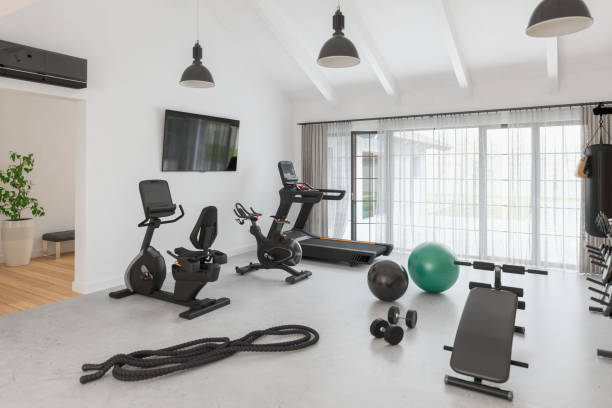
You can build a fully functional home gym in the corner of your living room with:
- A pair of adjustable dumbbells
- Resistance bands
- A yoga mat
- A pull-up bar
- Maybe a bench (optional but nice to have)
That’s it.
You now have enough to build muscle, lose fat, increase mobility, and get into the best shape of your life — right at home.
👉 If you want the full guide, I wrote an entire article on building a home gym for under $100 — you can read it here.
( home gym post.)
🏠 Why a Home Gym Setup Might Be the Best Move
1. No judgment — ever.
No anxiety.
No waiting for machines.
No awkward eye contact with the guy curling in the squat rack.
It’s just you versus you.
2. It’s the cheapest long-term option.
A basic home gym setup is a one-time cost.
Compare that to $30–$70 per month for a commercial gym…
and the savings add up fast.
3. It’s always open.
Whether you work nights, early mornings, or have kids —
your home gym never closes.
4. Motivation hits? Start instantly.
There’s no 20-minute drive.
No packing a bag.
No excuses.
Just pick up the weights and go.
⚠️ But Let’s Be Honest… There Are Downsides
A home gym setup is amazing — but it’s not for everyone.
1. Training alone takes discipline.
There’s no energy from other lifters.
No social atmosphere.
No coach walking by to correct your form.
2. Limited equipment (sometimes).
You can build muscle with dumbbells and bands — absolutely —
but eventually, some lifters miss barbells, cable machines, or leg presses.
3. It’s easier to skip workouts.
When the gym is right there, ironically, it becomes easier to say:
“I’ll do it later.”
And then… you don’t.
🔥 My Honest Opinion
If you truly can’t find the right gym that fits your lifestyle…
or if your real barrier is convenience…
then a home gym is a powerful, budget-friendly option that gives you complete control.
But if you’re someone who thrives off community, energy, and structure —
you may eventually miss the feeling of being in an actual gym.
There’s no “right” choice here.
The best gym is the one you’ll actually show up to.
FAQ: How to Find the Right Gym for You in 2026
1. How do I choose the best gym for my fitness goals?
Start by defining your primary goal: building muscle, losing weight, improving mobility, or general health.
If you want to build strength, look for gyms with good free weights, squat racks, benches, and space to lift.
If fat loss and cardio are your focus, prioritize machines, classes, and treadmills.
And if you need community support, a gym like the YMCA or a class-based studio may be a better fit.
2. What’s the best gym for beginners?
Gyms like Planet Fitness, local rec centers, and the YMCA are beginner-friendly because of their low-pressure environment and approachable culture.
But the “best” beginner gym is the one where you feel safe, welcomed, and consistent — no matter the brand.
If a gym feels intimidating or uncomfortable, it’s probably not the right fit for your stage of fitness.
3. How much should a gym membership cost in 2026?
Most commercial gyms fall in the $10–$70 per month range, depending on equipment, amenities, and location.
Boutique studios and premium gyms can cost $100–$250+ per month.
If you’re on a budget, ask about:
Off-peak memberships
Corporate discounts
Student/senior rates
No-commitment or month-to-month options
And don’t forget — guest passes are your friend. Always try before you sign.
4. Should I choose a gym close to home or work?
Choose whichever one you’re more likely to stick with.
For most people, a gym within 5–10 minutes of home equals way more consistency.
If you have to commute 20–30 minutes after a long workday…
your chances of quitting skyrocket.
Convenience matters more than motivation.
5. Is a home gym better than a regular gym?
It depends entirely on your personality and lifestyle.
A home gym is great if you want:
Zero commute
Total privacy
A budget-friendly long-term option
Flexibility to train anytime
But commercial gyms offer:
Community
Motivation from others
More equipment variety
Coaching and classes
If you want both convenience and accountability, you can even mix both — lift at home some days, hit the gym on others.
6. Can I get in shape without joining a gym?It depends entirely
Absolutely.
With dumbbells, resistance bands, bodyweight workouts, and consistency, you can build muscle and lose fat right from home.
A gym simply gives you more options — not the only options.
Conclusion: The Right Gym Isn’t About Perfection — It’s About Consistency
Finding the right gym for you in 2026 isn’t about chasing the trendiest facility, the fanciest machines, or the cheapest membership. It’s about finding a place where you feel comfortable, supported, and motivated to show up week after week.
Whether that ends up being a hardcore lifting gym…
a family-focused YMCA…
a beginner-friendly Planet Fitness…
or even a simple home gym setup —
Your best gym is the one you’ll actually stick with.
Most people don’t fail because they lack discipline or motivation. They fail because they chose an environment that didn’t fit their lifestyle, their goals, or their personality.
That’s exactly why I created the ACG Fitness Gym Directory.
It’s a growing, curated list of gyms across the country designed to help you compare real gyms — not just based on price, but on equipment, amenities, vibe, and community. I’m actively adding new gyms every week, so if you don’t see your city yet, be sure to check back often.
And if you do see your local gym listed, I’d really appreciate it if you left a quick review. Your experience could be the reason someone else finally finds the right gym for them.
Because choosing a gym isn’t just about you — it’s about building better fitness communities where people feel welcome, supported, and confident to start their journey.
So explore your options.
Trust your instincts.
And when you find a place that feels right, commit to it.
Because when you choose the right environment, consistency becomes easier — and progress becomes inevitable.
Action Creates Greatness.