Over the past year here at ACG Fitness, I’ve been writing a lot more about recovery, not just training harder, but training smarter.
We’ve talked about why recovery is the most underrated part of your overall health, the best ways to recover after a workout, and recently, I even shared my 10 best hacks to get quality sleep, simple habits that can dramatically improve how well you rest at night.
Because the more I’ve looked into this side of fitness, the more one thing has become very clear:
If you’re training hard but sleeping poorly, your results will always be limited.
The problem is, most people don’t really know how well they’re sleeping.
They guess.
They go by how tired they feel.
They assume eight hours means good recovery.
But sleep quality matters just as much as sleep quantity.
This is where sleep tracking becomes incredibly powerful.
Modern sleep trackers don’t just tell you how long you slept — they give you real insight into your sleep patterns, recovery trends, heart rate, breathing, and how your body is actually responding to training and stress.
Instead of guessing, you get data.
Instead of assumptions, you get feedback.
And over time, you start to understand what truly helps — and what’s hurting your recovery.
In 2026, wearable sleep trackers have become one of the most effective tools for improving recovery, performance, energy levels, and long-term health — not just for elite athletes, but for everyday people trying to feel and perform better.
In this guide, I’ll break down the 5 best sleep trackers of 2026, ranking them based on:
- Recovery tracking
- Accuracy
- Comfort and wearability
- Battery life
- Price and overall value
Whether you’re lifting weights, doing cardio, or simply trying to wake up feeling more rested, this list will help you find the right sleep tracker for your goals.
🔹 Why Sleep Tracking Matters for Recovery & Performance
When most people think about improving their physique or performance, they usually focus on training harder and eating better.
Both matter. A lot.
But neither of them works well without proper sleep.
This is something I’ve learned more and more as I’ve written about recovery here at ACG Fitness. You don’t actually build muscle in the gym. The gym is where you create the stimulus. The real progress happens later when you’re resting, recovering, and sleeping.
During high-quality sleep, your body repairs damaged muscle tissue, releases growth hormone, restores your nervous system, regulates testosterone and cortisol, and lowers inflammation. This is when strength improves, soreness fades, and your body becomes more resilient.
When sleep quality is poor, all of that slows down.
Recovery takes longer.
Strength plateaus.
Energy drops.
Fat loss becomes harder.
And mentally, everything feels heavier — focus, motivation, and mood all suffer.
And this part often gets overlooked: sleep doesn’t just affect your body, it affects your brain.
I recently wrote about the best foods for brain focus, and one thing that became very clear while researching that topic is how closely nutrition and sleep work together. The right foods support neurotransmitters, memory, and mental clarity, but without quality sleep, even the best nutrition can’t fully do its job.
Recovery isn’t just physical. It’s neurological. It’s hormonal. It’s cognitive.
The problem is that most people don’t actually know how well they’re sleeping.
They go by how tired they feel.
They assume eight hours automatically means good recovery.
They don’t realize how fragmented their sleep might be or how little deep sleep they’re getting.
Eight hours in bed does not always mean eight hours of quality sleep.
This is where sleep tracking becomes incredibly valuable.
Instead of guessing, a good sleep tracker shows you what’s really happening at night — how long you’re in deep and REM sleep, how your heart rate behaves, how your breathing changes, and how well your body is actually recovering from training and stress.
Over time, this data becomes extremely powerful.
You start to see patterns.
You learn which habits improve your sleep and which ones hurt it.
You notice how hard training days affect your recovery.
And you gain insight into when your body is ready to push — and when it clearly needs more rest.
Used correctly, a sleep tracker becomes less of a gadget and more of a recovery and performance tool.
For anyone serious about building muscle, losing fat, improving focus, or simply feeling better day to day, understanding your sleep patterns is one of the smartest things you can do in 2026.
🔹 How We Ranked These Sleep Trackers
Not all sleep trackers are built for the same purpose.
Some are designed mainly as smartwatches.
Some focus on general wellness.
Some are built specifically for recovery and performance.
For this ranking, I didn’t just look at brand names or popularity. I focused on the features that actually matter for sleep quality, recovery, and real-world usability.
Each device on this list was evaluated based on:
Sleep Tracking Accuracy
How well the device tracks sleep stages, duration, and consistency over time.
Recovery & Health Metrics
Heart rate variability (HRV), resting heart rate, breathing rate, and recovery readiness scores.
Comfort & Wearability
How comfortable the device is to wear all night — especially important for long-term use and consistency.
Battery Life
Whether the device can last multiple nights without charging, which is critical for accurate sleep tracking.
Subscription Model
Whether advanced sleep and recovery features require a monthly membership.
Price & Overall Value
Not just the cheapest option, but which device offers the best return on investment for the features you get.
The goal of this list isn’t to find the flashiest gadget.
It’s to identify the best sleep trackers of 2026 for recovery, accuracy, comfort, and long-term value — especially for people who care about training, performance, and overall health.
🔹 #5 — Fitbit Inspire 3 (Best Budget Sleep Tracker)
If you’re just getting started with sleep tracking and recovery, the Fitbit Inspire 3 is one of the easiest and most affordable ways to begin.
This is not a high-end recovery device like a Whoop or a smart ring — and it’s not trying to be.
The Inspire 3 is built for people who want simple, reliable sleep tracking, light activity tracking, and basic recovery insights without spending a lot of money or wearing a bulky smartwatch to bed.
And for that purpose, it does a very good job.
Fitbit has been in the sleep tracking space longer than almost any other consumer brand, and that experience shows in how clean and easy the Inspire 3 is to use.
Once you put it on, it tracks automatically in the background. You don’t have to press buttons, start sessions, or think about it. You simply wear it, sleep, and review your data in the morning.
Sleep Tracking & Recovery Features
Where the Inspire 3 really shines is in its sleep and wellness tracking.
It automatically tracks your sleep every night and gives you a daily Sleep Score, showing how well you actually rested — not just how long you were in bed. It also breaks down your time in light, deep, and REM sleep, which is extremely useful for understanding recovery quality.
One of the nicest features at this price point is Fitbit’s Personalized Sleep Profile, which shows long-term patterns and trends instead of just nightly numbers. This helps you see whether your sleep is improving over time or quietly getting worse.
The smart wake vibrating alarm is also a great touch. Instead of blasting you awake at a random moment, it gently wakes you during a lighter stage of sleep so you start the day feeling less groggy.
On the recovery side, the Inspire 3 tracks:
- resting heart rate
- heart rate trends overnight
- breathing rate
- SpO2 (blood oxygen)
- stress levels and stress management scores
It also includes irregular heart rhythm notifications and basic recovery readiness insights through Fitbit Premium.
For a small, lightweight tracker, that’s an impressive amount of health data.
Comfort, Wearability & Battery Life
Comfort is one of the biggest strengths of the Inspire 3.
It’s extremely lightweight, slim, and barely noticeable on your wrist while you sleep. If you’ve ever tried wearing a bulky smartwatch overnight and hated it, this is a much better experience.
Battery life is also excellent.
Fitbit claims up to 10 days on a single charge, which means you can track multiple nights of sleep without constantly worrying about charging — a huge advantage for consistent data.
The Inspire 3 is water resistant to 50 meters, so you can wear it through showers, sweat, and workouts without thinking about it.
Subscription Considerations
One important thing to know with Fitbit is the Premium membership model.
When you buy the Inspire 3, you get a 6-month Fitbit Premium trial, which unlocks more detailed sleep insights, recovery analytics, and personalized coaching.
After the trial ends, many of the advanced features require a monthly subscription.
This doesn’t make the device bad — but it does mean that long-term cost can slowly add up, which is something to consider if you plan on using it for years.
Who It’s Best For
The Fitbit Inspire 3 is best for:
- beginners who are new to sleep tracking
- people on a tighter budget
- anyone who wants simple, automatic sleep data
- users who prefer a very lightweight wrist tracker
- general wellness and recovery tracking
It’s not ideal for advanced athletes or people who want deep recovery metrics, readiness scoring, or high-level performance analysis.
But as an entry-level sleep tracker, it’s one of the best values available in 2026.
Final Verdict on Fitbit Inspire 3
| Pros | Cons |
|---|---|
| Affordable entry-level sleep tracker | Advanced features require Premium subscription |
| Lightweight and very comfortable for sleep | Limited recovery and performance metrics |
| Accurate sleep stage tracking | Not ideal for serious athletes |
| Long battery life (up to 10 days) | Smaller screen, basic interface |
| Smart wake vibrating alarm | Readiness insights are limited |
The Fitbit Inspire 3 earns the #5 spot because it offers excellent sleep tracking at a very accessible price.
It’s comfortable, easy to use, accurate enough for most people, and backed by one of the strongest sleep tracking platforms in the industry.
If you’re just beginning your recovery journey and want reliable sleep insights without spending hundreds of dollars, this is a very smart place to start.
👉 See FitBit Inspire 3 on Amazon
🔹 #4 — Apple Watch Series 10 (Best Smartwatch for Sleep Tracking)
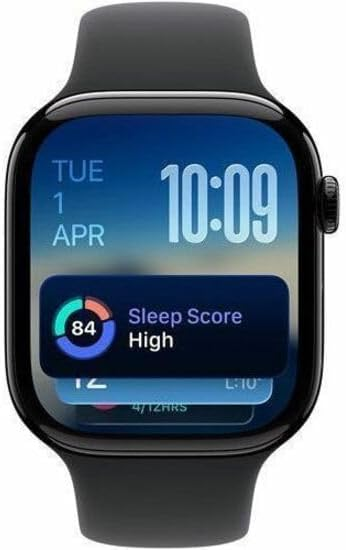
Long-time readers here at ACG Fitness know this already, I’ve always been a big fan of Apple products.
I use Apple devices daily, I appreciate how well they’re designed, and I genuinely think Apple builds some of the best consumer tech on the market.
So it should come as no surprise to see the Apple Watch Series 10 on this list.
That said, even though the Apple Watch is an excellent device, it doesn’t rank higher here for one simple reason:
It’s a smartwatch first, and a recovery tool second.
And that matters when we’re talking specifically about sleep tracking and recovery.
Sleep Tracking & Recovery Features
Apple has made huge improvements in sleep tracking over the past few years, and by the time we reached Series 10, the platform is very mature.
The Apple Watch tracks:
- total sleep time
- sleep stages (light, deep, REM)
- heart rate overnight
- respiratory rate
- wrist temperature trends
- blood oxygen levels
- sleep consistency
Apple’s sleep stage tracking is very accurate, and the data presentation inside the Health app is clean, detailed, and easy to understand.
One thing Apple does extremely well is long-term trend tracking.
Instead of obsessing over one bad night of sleep, the Apple Watch shows you:
- weekly and monthly sleep consistency
- changes in heart rate over time
- breathing trends
- recovery patterns related to training and stress
This makes it very useful for understanding how your lifestyle, workouts, and habits are affecting your recovery.
If you already own an iPhone, the Apple Watch integrates seamlessly into your ecosystem — no learning curve, no complicated setup, and no extra apps to manage.
Activity, Training & Daily Recovery Integration
Where the Apple Watch really shines is in daily activity and training integration.
It tracks:
- workouts across dozens of modes
- heart rate during training
- calories and movement
- VO₂ max trends
- cardio fitness
- mobility and walking stability
For people who want one device to handle training, daily activity, notifications, and sleep, the Apple Watch is one of the best all-around wearables available.
From a lifestyle perspective, it’s hard to beat.
Comfort, Wearability & Battery Limitations
This is where the Apple Watch starts to fall behind recovery-focused devices.
Comfort while sleeping is good, but not perfect.
Compared to smart rings or Whoop, the Apple Watch is:
- larger
- heavier
- more noticeable on the wrist at night
Some people adapt quickly. Others never really love sleeping with a smartwatch on. I know I don’t.
The biggest limitation, however, is battery life.
With daily use, workouts, and notifications, most Apple Watches need to be charged every day sometimes every day and a half.
That means you constantly have to plan charging around sleep tracking, which is not ideal if consistent recovery data is your goal.
The Biggest Drawback: Price
This is the main reason the Apple Watch Series 10 doesn’t rank higher on this list.
It’s expensive.
Once you factor in:
- the watch itself
- optional cellular
- accessories
- and long-term upgrades
you’re easily spending several hundred dollars.
For that price, you can buy:
- a dedicated smart ring
- a Whoop membership
- or multiple years of recovery tracking
And those devices are often better optimized specifically for sleep and recovery.
The Apple Watch gives you a lot, but you are paying for many features that have nothing to do with recovery.
Who It’s Best For
The Apple Watch Series 10 is best for:
- Apple users who already live in the ecosystem
- people who want one device for training, lifestyle, and sleep
- general fitness tracking
- users who value convenience and app integration
- everyday health monitoring
It’s not ideal for:
- people focused primarily on recovery and readiness
- users who want long battery life
- people who dislike charging daily
- those looking for the best value purely for sleep tracking
Pros & Cons — Apple Watch Series 10
| Pros | Cons |
|---|---|
| Excellent sleep stage accuracy | Expensive compared to recovery-focused devices |
| Seamless Apple ecosystem integration | Requires daily charging |
| Tracks training, activity, and health in one device | Bulky compared to rings or straps |
| Strong long-term trend tracking | Recovery metrics are limited |
| No subscription required | You pay for many features unrelated to recovery |
Final Verdict on Apple Watch Series 10
The Apple Watch Series 10 is one of the best all-around wearables in the world.
It’s polished, accurate, versatile, and incredibly powerful for daily health and fitness tracking.
But when it comes specifically to sleep tracking and recovery, it’s not the most efficient or cost-effective tool available in 2026.
You’re paying a premium for smartwatch features, not for elite recovery insights.
That’s why it lands at #4 on this list.
If you already own one, great. Use it.
If your main goal is recovery, sleep quality, and performance optimization, there are better specialized options higher up in this ranking.
👉 See Apple Watch Series 10 on Amazon
🔹 #3 — Whoop 5.0 (Best for Athletes & Training Recovery)
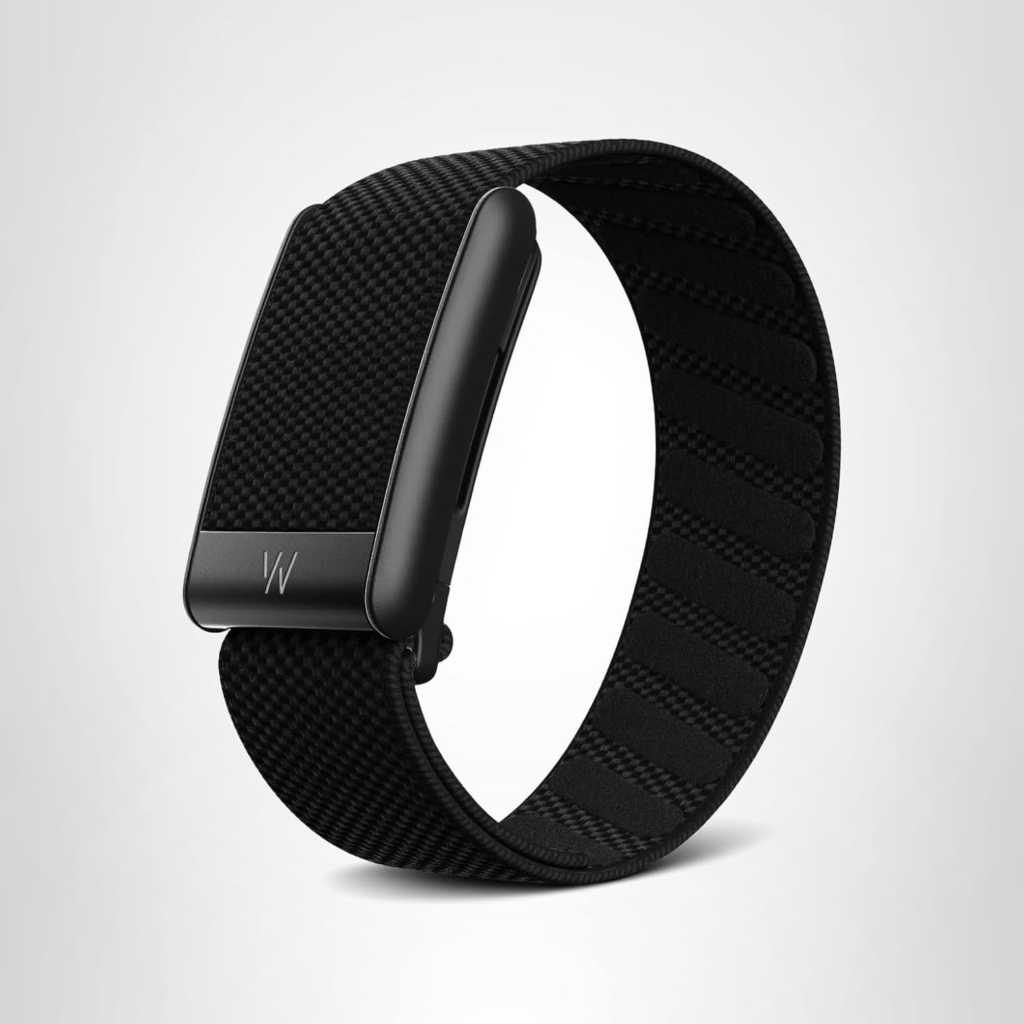
If your main goal is improving performance, managing training load, and optimizing recovery, there’s a very good chance you’ve already heard of Whoop.
Whoop has built its entire brand around one idea:
Measure strain, manage recovery, and improve performance.
And for serious athletes and highly active people, it does that extremely well.
Unlike smartwatches and rings, Whoop is not trying to be a lifestyle device. There are no notifications, no apps, no distractions.
It exists for one purpose — to help you train smarter and recover better.
Recovery, Strain & Readiness Tracking
This is where Whoop truly separates itself from most wearables.
Instead of focusing primarily on steps or workouts, Whoop tracks your body 24/7 and gives you daily insights into how recovered you actually are.
Each morning, you receive:
- a Recovery Score
- resting heart rate trends
- heart rate variability (HRV)
- respiratory rate
- sleep performance
- and strain recommendations for the day
This is incredibly powerful for anyone who trains hard.
Instead of guessing whether you should push or back off, Whoop shows you objectively how your nervous system and cardiovascular system have recovered overnight.
Over time, this helps you:
- avoid overtraining
- reduce injury risk
- improve consistency
- plan training intensity more intelligently
For people who lift heavy, train frequently, or compete in sports, this data can be a game changer.
Sleep Tracking & Performance Integration
Whoop’s sleep tracking is also very strong.
It tracks:
- total sleep time
- sleep stages
- sleep efficiency
- disturbances
- time spent in deep and REM sleep
But more importantly, it connects sleep directly to recovery and performance.
Instead of sleep being a separate metric, it becomes part of your readiness score and daily training recommendations.
You quickly see how:
- late nights affect recovery
- alcohol impacts HRV
- hard training changes sleep quality
- stress alters readiness
This kind of feedback loop is exactly what high-level athletes need.
Comfort, Wearability & Battery System
The Whoop 4.0 is extremely lightweight and comfortable to wear overnight.
Because it doesn’t have a screen, it’s slim, flexible, and barely noticeable while sleeping.
One unique advantage is the battery pack system.
Instead of taking the strap off to charge, you slide a small battery pack onto the device while still wearing it. That means you never have to stop tracking sleep or recovery due to charging — a huge benefit for consistent data.
Battery life typically lasts about 4 to 5 days, depending on usage.
The Subscription Model (Big Consideration)
This is the biggest drawback of Whoop.
Whoop does not sell you the device.
Instead, you pay a monthly or yearly subscription, and the hardware is included.
Over time, this becomes one of the most expensive options on this list.
And if you stop paying, you lose access to your data.
For serious athletes, many people justify the cost because of how valuable the recovery insights are.
But for casual users, this ongoing expense can be hard to justify.
Who It’s Best For
Whoop is best for:
- serious athletes
- frequent trainers
- competitive lifters
- endurance athletes
- people who want daily readiness guidance
- users who care more about recovery than notifications
It’s not ideal for:
- casual fitness users
- people who dislike subscriptions
- those who want smartwatch features
- budget-conscious buyers
- users who prefer ring-style wearables
Pros & Cons — Whoop 4.0
| Pros | Cons |
|---|---|
| Best recovery and readiness tracking available | Requires ongoing subscription |
| Excellent HRV and strain analysis | No screen or smartwatch features |
| Direct connection between sleep and performance | Expensive long-term cost |
| Very comfortable to wear overnight | Not ideal for casual users |
| Unique charge-while-wearing system | Data access stops if subscription ends |
Final Verdict on Whoop 4.0
Whoop 4.0 is one of the most powerful recovery tools available in 2026.
For athletes and serious trainees, its recovery scores, strain tracking, and readiness insights provide information that most other devices simply can’t match.
But that power comes at a cost.
The subscription model makes Whoop one of the most expensive options long-term, and it offers very little outside of performance and recovery tracking.
That’s why it earns the #3 spot on this list.
If you are highly active and recovery is a top priority, Whoop is an outstanding tool.
If you want the best overall value, comfort, and long-term affordability, the top two devices on this list may suit you better.
👉 See Whoop 4.0 Plans and Features
🔹 #2 — Oura Ring Gen 4 (Best Premium Smart Ring for Sleep & Recovery)
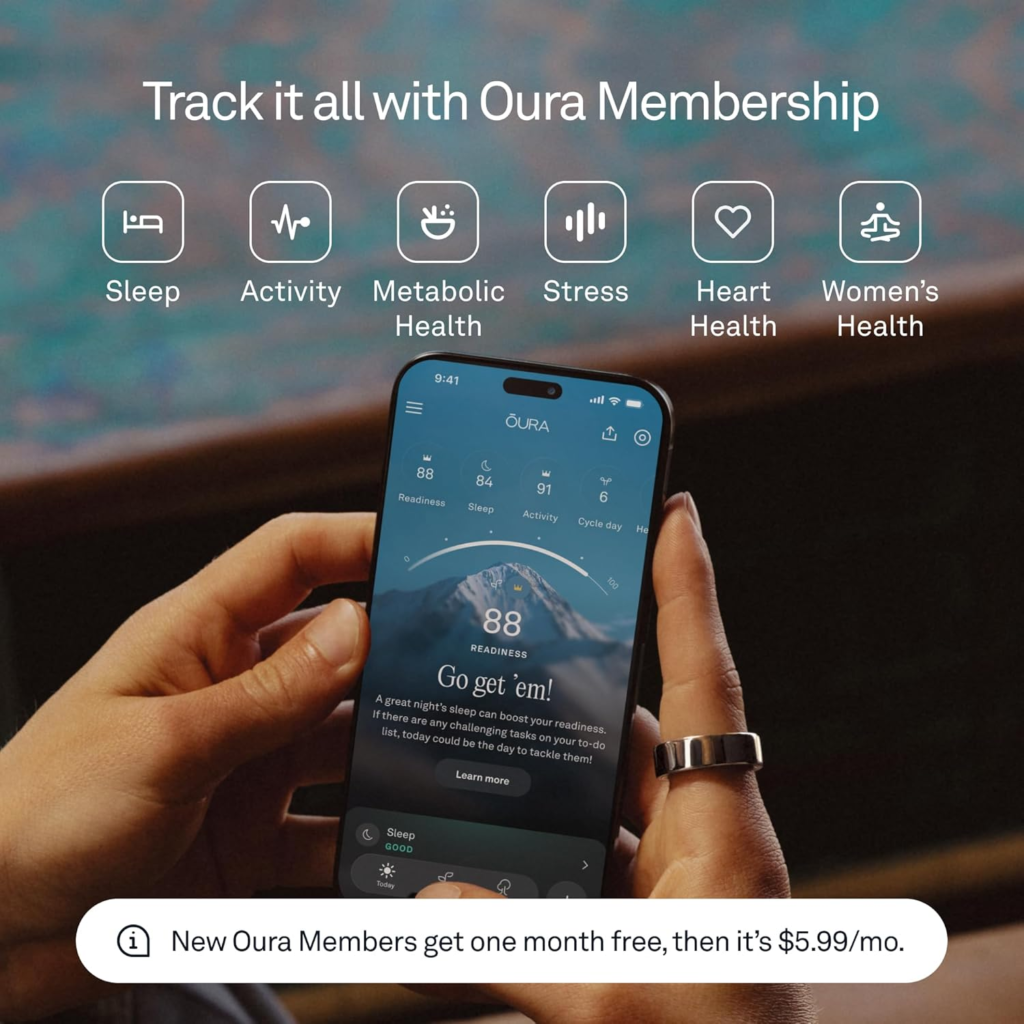
If smart rings had a blueprint, the Oura Ring would be it.
Oura didn’t just popularize sleep tracking — it defined how modern recovery tracking works on a small wearable.
Now in its fourth generation, the Oura Ring Gen 4 remains one of the most refined, accurate, and comfortable sleep tracking devices available in 2026.
This is the ring most other brands are still trying to catch.
👉 See Oura Ring Gen 4 on Amazon
Sleep Tracking & Recovery Features
This is where Oura continues to set the standard.
The Gen 4 builds on everything that made earlier versions successful, with improved sensors, better temperature tracking, and more stable heart rate and HRV readings overnight.
Each night, Oura tracks:
- total sleep time
- time in light, deep, and REM sleep
- sleep efficiency and disturbances
- resting heart rate trends
- heart rate variability (HRV)
- breathing rate
- blood oxygen levels
- continuous overnight temperature changes
What really separates Oura is how intelligently it organizes this data.
Instead of forcing you to interpret charts, Oura gives you three core daily scores:
- Sleep Score – how well you actually rested
- Readiness Score – how recovered your body is today
- Activity Score – how well your movement aligns with recovery
Every morning, you immediately know:
- whether your body is ready to push
- whether you should train lighter
- or whether recovery needs to be the priority
Over time, these trends become extremely valuable.
You start to see:
- how training volume affects recovery
- how stress impacts HRV
- how late meals or alcohol hurt sleep quality
- how travel shifts your circadian rhythm
- how consistency improves readiness
For people focused on recovery, longevity, and long-term health, this feedback loop is incredibly powerful.
Comfort & The Ring Advantage
One of Oura’s biggest strengths remains its form factor.
Compared to watches, straps, or chest devices, a ring is simply easier to live with.
It’s:
- lightweight
- discreet
- silent
- and barely noticeable while sleeping
This matters more than most people realize.
The more comfortable a device is, the more consistently you’ll wear it.
And consistency is everything in sleep tracking.
Oura is especially popular with:
- professionals and executives
- travelers
- wellness-focused users
- light sleepers
- people who dislike sleeping with watches
You can wear it all day and all night without it ever feeling like fitness equipment.
Battery Life & Practical Use
Battery life on the Gen 4 is solid.
Most users can expect 4 to 7 days per charge, depending on settings and usage.
That’s enough to track multiple nights of sleep without worrying about charging constantly — which is critical for consistent recovery data.
Charging is quick and simple, and the ring easily fits into a weekly routine.
The Subscription Model (The Biggest Drawback)
This is the main reason Oura does not take the top spot on this list.
While the Gen 4 hardware is excellent, Oura still requires a monthly subscription to access most of its advanced sleep, readiness, and recovery features.
Without the membership:
- insights become limited
- trends disappear
- readiness scoring is reduced
Over time, this significantly increases the true cost of ownership.
You’re not just buying a ring — you’re buying into an ongoing platform.
For many users, the quality of insights justifies the subscription.
For others, especially people looking for long-term value, this becomes a major downside.
Who It’s Best For
The Oura Ring Gen 4 is best for:
- people focused heavily on sleep quality
- recovery-first users
- wellness and longevity audiences
- professionals and executives
- travelers and frequent flyers
- people who hate wearing watches at night
It’s not ideal for:
- budget-conscious buyers
- people who dislike subscriptions
- users who want workout and training tracking
- athletes who want strain-based guidance
- people looking for the best value option
Pros & Cons — Oura Ring Gen 4
| Pros | Cons |
|---|---|
| Industry-leading sleep tracking accuracy | Expensive upfront cost |
| Extremely comfortable and discreet | Requires monthly subscription |
| Excellent readiness and recovery scoring | Limited workout and training tracking |
| Powerful long-term trend insights | Long-term cost adds up |
| Ideal for sleep-first users | No smartwatch or notification features |
Final Verdict on Oura Ring Gen 4
The Oura Ring Gen 4 remains one of the best sleep tracking devices in the world.
Its accuracy, comfort, readiness scoring, and long-term recovery insights make it an outstanding choice for anyone serious about sleep quality and overall health.
If your primary goal is understanding your sleep patterns and optimizing recovery, Oura delivers elite-level performance.
But between the high upfront price and the ongoing subscription, it is also one of the most expensive options on this list over time.
That’s why it earns the #2 spot.
It offers premium tracking and premium insights — but for many people, the best balance of performance, ownership, and long-term value is still sitting at the top of this ranking.
🔹 #1 — Omni Ring (Best Value Sleep & Recovery Tracker of 2026)
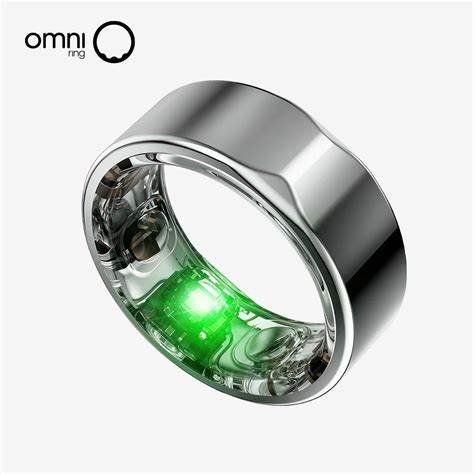
Over the past year, I’ve tested and reviewed a lot of recovery tools here at ACG Fitness.
And if there’s one device that surprised me the most in the best way possible, it’s the Omni Ring.
This ring doesn’t get nearly the same mainstream attention as Oura or Whoop.
But when you look closely at what it offers, how it performs, and how much it costs, one thing becomes very clear:
The Omni Ring is the best overall value sleep and recovery tracker of 2026.
Not the flashiest.
Not the most expensive.
But the smartest balance of performance, comfort, features, and price.
Before ranking Omni at the top of this list, I spent several weeks testing it and comparing it directly against other recovery devices.
I’ve broken down everything — accuracy, comfort, app quality, recovery insights, and long-term value — in my full Omni health ring review here on ACG Fitness.
👉 Read My Full Omni Health Ring Review Here
👉 See Omni Ring — Best Value Sleep Ring of 2026
Sleep Tracking & Recovery Features
Where the Omni Ring really stands out is how much recovery data it delivers without overcomplicating things.
Each night, Omni tracks:
- total sleep time
- light, deep, and REM sleep
- sleep efficiency and disturbances
- resting heart rate trends
- heart rate variability (HRV)
- respiratory rate
- blood oxygen levels
- overnight body temperature changes
But unlike many devices that simply dump data on you, Omni organizes this information into clear recovery and readiness insights. You see your metrics in real time.
Each morning, you can immediately see:
- how well you slept
- how recovered your body is
- how your heart and nervous system responded overnight
- whether you’re ready to train hard or should prioritize recovery
Over time, this becomes incredibly valuable.
You start to recognize:
- which habits improve your sleep
- how late meals or alcohol affect recovery
- how training volume impacts readiness
- how stress shows up in your HRV
- and when your body is quietly under-recovered
For people focused on strength, physique, and long-term health, this feedback loop is exactly what you want.
Comfort & Wearability (Huge Advantage)
One of Omni’s biggest strengths is simply how comfortable it is.
Just like Oura, Omni benefits from the ring form factor.
It’s:
- lightweight
- discreet
- silent
- and barely noticeable while sleeping
But where Omni really wins is consistency.
Because it’s comfortable and unobtrusive, you naturally wear it every night.
And consistent data is far more valuable than perfect data you only collect occasionally.
For anyone who hates sleeping with watches or straps, a smart ring is the best possible solution — and Omni does this extremely well.
Battery Life & Practical Use
Battery life on the Omni Ring is excellent.
Most users get 5 to 7 days per charge, which means you can track an entire week of sleep and recovery without thinking about charging.
That matters more than people realize.
The fewer interruptions you have, the better your data becomes.
Charging is simple, fast, and easy to work into a weekly routine.
The Biggest Advantage: No Subscription & Outstanding Value
This is the reason Omni wins this list.
Unlike Oura and Whoop, the Omni Ring does not require a monthly subscription to access its core recovery and sleep features.
That means:
- you own the hardware
- you own your data
- there are no ongoing fees
- and the long-term cost stays low
When you compare total cost over 2–3 years:
- Oura becomes significantly more expensive
- Whoop becomes one of the most expensive options available
- Apple Watch continues to require frequent upgrades
Omni, on the other hand, gives you:
- premium recovery tracking
- ring-level comfort
- strong accuracy
- and full access to insights
at a fraction of the long-term cost.
For most people, this is the smartest financial and practical decision.
Who It’s Best For
The Omni Ring is best for:
- people serious about recovery and sleep quality
- lifters and fitness enthusiasts
- busy professionals
- wellness and longevity audiences
- anyone who hates sleeping with watches
- buyers who want long-term value
It’s especially ideal for people who want:
- recovery insights without subscriptions
- discreet 24/7 tracking
- accurate sleep data
- and a one-time purchase model
Pros & Cons — Omni Ring
| Pros | Cons |
|---|---|
| Excellent sleep and recovery tracking | Smaller brand than Oura or Apple |
| No subscription required | App ecosystem still growing |
| Very comfortable ring design | Fewer smartwatch-style features |
| Strong battery life (5–7 days) | Limited training and workout tracking |
| Best long-term value on this list | Not as widely known |
Final Verdict on Omni Ring
The Omni Ring earns the #1 spot because it delivers exactly what most people actually need.
Accurate sleep tracking.
Strong recovery insights.
Comfort you forget you’re wearing.
No subscriptions.
And outstanding long-term value.
While Oura remains the premium benchmark and Whoop is exceptional for elite athletes, the Omni Ring offers the best overall balance for the majority of people in 2026.
If your goal is better recovery, better sleep, better training, and smarter long-term health — without paying monthly fees — this is the device I recommend most confidently.
This is the best value sleep and recovery tracker of 2026.
🔹 Frequently Asked Questions About Sleep Trackers
Are sleep trackers actually accurate?
Modern sleep trackers are surprisingly accurate at measuring sleep duration, sleep stages, heart rate, and recovery trends.
While they’re not identical to clinical sleep lab equipment, the best devices — especially smart rings and recovery-focused trackers — are extremely reliable for tracking patterns over time.
The real value isn’t one perfect night of data.
It’s seeing:
long-term trends
consistency
recovery changes
and how your habits affect your sleep
That’s where sleep trackers become powerful tools for improving recovery and performance.
What is the best sleep tracker for recovery in 2026?
For most people, the Omni Ring is the best overall sleep and recovery tracker in 2026.
It offers:
excellent sleep tracking
strong recovery insights
comfortable ring design
no monthly subscription
and outstanding long-term value
For athletes who want readiness scoring, Whoop is excellent.
For premium users, Oura remains a top choice.
For Apple users, the Apple Watch is very convenient.
The “best” option depends on your goals — but Omni delivers the best balance for most people.
Do I really need a sleep tracker to improve my sleep?
No, you can absolutely improve your sleep without a tracker.
In fact, habits matter more than devices.
That’s why I always recommend starting with:
better sleep routines
consistent bedtimes
smart nutrition
limiting late caffeine and screens
If you haven’t already, I highly recommend reading my 10 best hacks to get quality sleep and my article on best foods for brain focus — both can dramatically improve recovery on their own.
A sleep tracker doesn’t replace good habits.
It simply gives you data and feedback so you know what’s working and what’s hurting your recovery.
What’s better for sleep tracking, a ring, a watch, or a strap?
For pure sleep tracking and comfort, smart rings are usually the best option.
Rings:
are lightweight
don’t press against your wrist
don’t vibrate or light up
and are easier to sleep with long-term
Watches are great for daily activity and training, but:
bulkier at night
shorter battery life
less comfortable for light sleepers
Straps like Whoop are excellent for athletes, but less discreet for everyday wear.
If sleep quality is your main goal, a ring is usually the smartest choice.
Do sleep trackers help with muscle recovery and performance?
Absolutely.
Sleep is when:
muscle repairs
growth hormone is released
testosterone is regulated
inflammation drops
and your nervous system resets
Tracking your sleep helps you see:
when you’re under-recovered
when training volume is too high
how stress affects readiness
when rest days are needed
Over time, this leads to:
better recovery
fewer injuries
more consistent training
better strength gains
and improved mental focus
Sleep tracking is one of the most underrated performance tools available.
🔹 Final Thoughts: Which Sleep Tracker Should You Choose in 2026?
Sleep is not just a lifestyle habit.
It’s the foundation of recovery.
It’s where muscle is built.
It’s where hormones reset.
It’s where your brain sharpens.
And it’s where real long-term progress actually happens.
You can train hard.
You can eat well.
You can take supplements and follow programs.
But if your sleep is poor, everything else eventually stalls.
That’s why tracking your sleep is no longer just a wellness trend — it’s one of the smartest performance and health decisions you can make in 2026.
The good news is that today’s sleep trackers are better than ever.
Whether you’re a serious athlete, a busy professional, or someone simply trying to feel more rested and focused, there is a device on this list that can help you understand your recovery and improve your results.
If you want the short version:
- Best overall value: Omni Ring
- Best premium ring: Oura Ring Gen 4
- Best for athletes: Whoop
- Best smartwatch option: Apple Watch Series 10
- Best budget tracker: Fitbit Inspire 3
For most people, the Omni Ring stands out as the smartest choice.
It delivers:
- excellent sleep tracking
- strong recovery insights
- comfortable ring design
- no subscription fees
- and outstanding long-term value
That combination is very hard to beat.
More importantly, it gives you what actually matters — consistent data that helps you recover better, train smarter, and feel better every day.
If you want a deeper breakdown of how Omni performs in real life, I highly recommend checking out my full review:
👉 Read My Full Omni Health Ring Review Here
At the end of the day, the best sleep tracker isn’t the most expensive or the most popular.
It’s the one you’ll actually wear consistently — and the one that helps you make better decisions about your training, recovery, and lifestyle.
Because in fitness, just like in life…
Action Creates Greatness.